Article: In-Person Retail Isn’t Disappearing. It’s Getting More Important.

In-Person Retail Isn’t Disappearing. It’s Getting More Important.
A mother pulls into the market parking lot with two kids in the back seat and a grocery list she is already tired of thinking about.
Before they make it through the front doors, the kids spot the ice cream stand near the entrance. One wants chocolate. The other asks what flavors they have, then changes their mind twice. The person behind the counter smiles, waits, and hands over two cones. The kids light up. For a few minutes, the trip is not just another errand. It feels like an outing.
That moment does not happen online.
You can order groceries through an app. You can compare prices, read reviews, reorder staples, and pay without speaking to anyone. But you cannot smell fresh fruit near the entrance, let a child point at the bakery case, or ask an associate which melon is ripe today. You cannot fully recreate the small, human moments that make a store feel like part of a community instead of just another transaction.
That is why the future of retail is not as simple as “digital replaces physical.”
Digital is growing, and retailers should take that seriously. In the first quarter of 2026, the U.S. Census Bureau reported that e-commerce accounted for 16.9% of total U.S. retail sales. E-commerce sales grew 9.8% year over year, while total retail sales grew 3.9%.
But that data tells two stories at once. Digital commerce is growing quickly, while the large majority of retail sales are still happening outside pure e-commerce. The store remains central to how people buy, return, exchange, explore, and make decisions.
In-person retail is not disappearing. It is being asked to do more.
The Store Is Where Retail Gets Real
A website can promise availability. The store has to actually have the item.
A product page can list features. An associate may have to explain which option fits the customer’s real need.
An online order can offer pickup. A store team has to find the item, stage it, hand it off, and fix the situation if something is wrong.
A return policy can look simple on a page. At the counter, it may involve tender rules, exchanges, receipts, customer history, inventory updates, and judgment.
The store is no longer just a place where the final sale happens. It is where digital promises are kept or broken.
That puts more pressure on store teams, not less. Associates are expected to move quickly, answer accurately, handle exceptions, and deliver a better experience than the customer could have had alone.
That is hard to do with disconnected tools.
Technology Should Help People Serve People
There is a tempting idea in retail technology that the perfect system removes people from the process.
Sometimes automation is exactly right. Nobody wants friction for a simple reorder, a basic lookup, or a routine payment.
But retail is full of moments that are not routine.
A customer is buying a gift and needs advice. A shopper wants to exchange an item but used a different payment method. Someone is unsure about fit, compatibility, ingredients, warranty, delivery, or care instructions.
In those moments, the associate matters.
The best technology should not make the store feel less human. It should give associates better context so they can serve people better: cleaner inventory data, better customer lookup, easier access to order history, faster returns, and POS workflows that match the reality of the store.
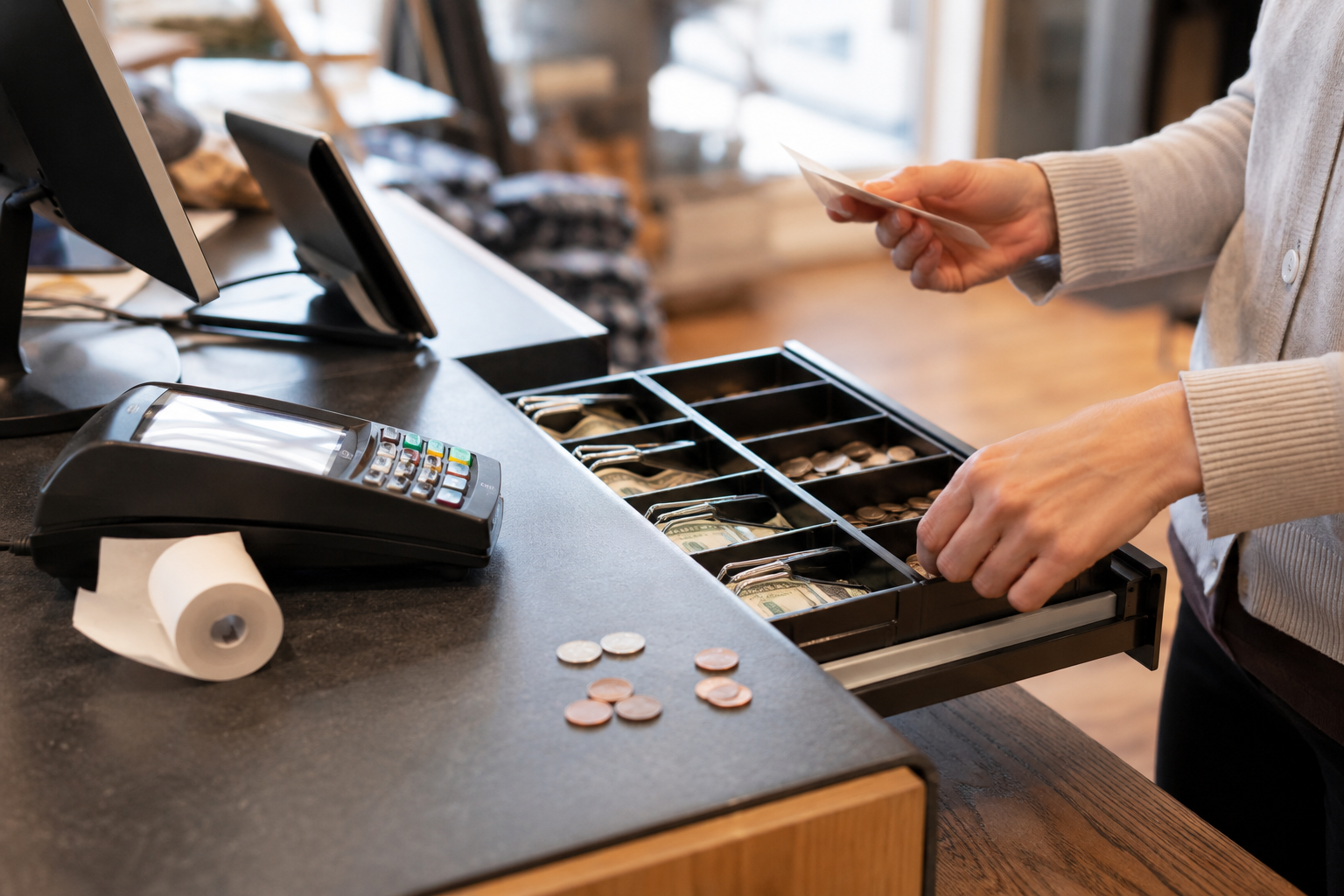
This is where POS has changed. It is not just a register anymore. In many retail environments, POS is becoming the store execution layer. It is where the associate completes the sale, handles the exception, updates inventory, applies the policy, and captures the transaction correctly for the rest of the business.
AI will likely become part of this, too. But in the store, the most useful AI will be practical support inside the work: helping associates find answers, understand customer context, spot exceptions, summarize product details, or reduce the time spent searching across systems.
The point is not to replace the person helping the customer.
The point is to help that person be more useful.
More Digital, Still Human
None of this means every physical store is safe or every retail footprint should stay the same.
Some retailers are closing locations. Others are opening new formats, shrinking large footprints, or turning locations into service, pickup, or fulfillment hubs. That is not the death of physical retail. It is a sorting process.
NRF forecasts that retail sales in 2026 will grow 4.4% over 2025 to $5.6 trillion. The opportunity is still there. But winning that opportunity requires retailers to think carefully about what their stores are for.
Retail will keep becoming more digital. AI will become more common. Customers will expect faster answers, easier payments, more accurate inventory, and smoother movement between online and in-store experiences.
But people will still serve people.
A tired parent will still appreciate a kind associate. A shopper will still want advice. A customer with a problem will still want someone to help make it right. A store that smells like fresh bread, produce, leather, flowers, coffee, or sawdust will still create a kind of confidence a screen cannot fully replace.
The future of retail is not physical versus digital.
It is digital helping physical work better. It is data helping associates act with more confidence. It is AI helping people serve other people with better context, less friction, and more care.
In-person retail is not going away.
The stores that matter most are becoming more connected, more operationally important, and, if retailers get it right, more human.
See how SuiteRetail helps retailers connect store execution with NetSuite.